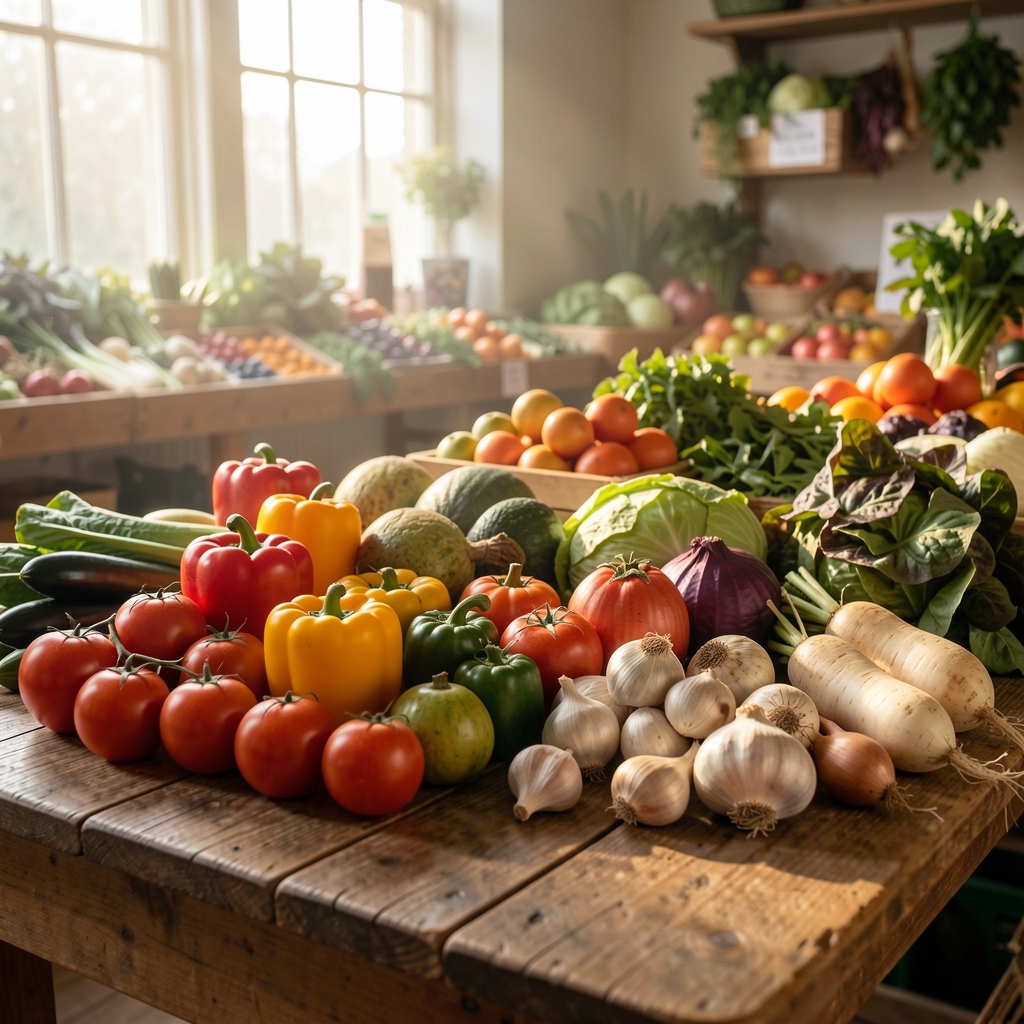
There is something instructive about what a person reaches for first at a farmers’ market stall — before the lists, before the recipes, before the particular demands of a Tuesday evening. The hand moves toward one kind of produce and away from another, and in that almost wordless exchange, something about the week’s eating is already decided. This piece examines what nutritional observation has to say about the relationship between those early choices, the foods that find their way into the kitchen, and the body’s response over time.
The Architecture of a Weekly Shop
The structure of what one buys on a Saturday tends to govern what one eats by Wednesday. This observation, unremarkable on its surface, carries more nutritional consequence than it is usually given credit for. When a kitchen is stocked with a variety of vegetables — root vegetables in autumn, leafy greens through winter, brassicas in early spring — the daily preparation of a meal becomes an act of seasonal attunement rather than a deviation from a fixed menu.
Nutritional literature on food environments consistently observes that the availability of particular ingredients in the home exerts a quiet but persistent influence on what is eventually consumed. This is not the same as prescribing a specific diet. It is more a structural observation: the kitchen reflects the shop, and the shop reflects the market visit, and the market visit reflects an accumulated sense of what is worthwhile.
Portion awareness, often discussed as though it were purely a matter of willpower, is in practice deeply shaped by what comes through the door. A bag of varied seasonal produce encourages variety on the plate almost automatically. A uniformly processed selection tends toward repetition. The decisions made before cooking begins are, in this sense, the most nutritionally significant decisions of the week.
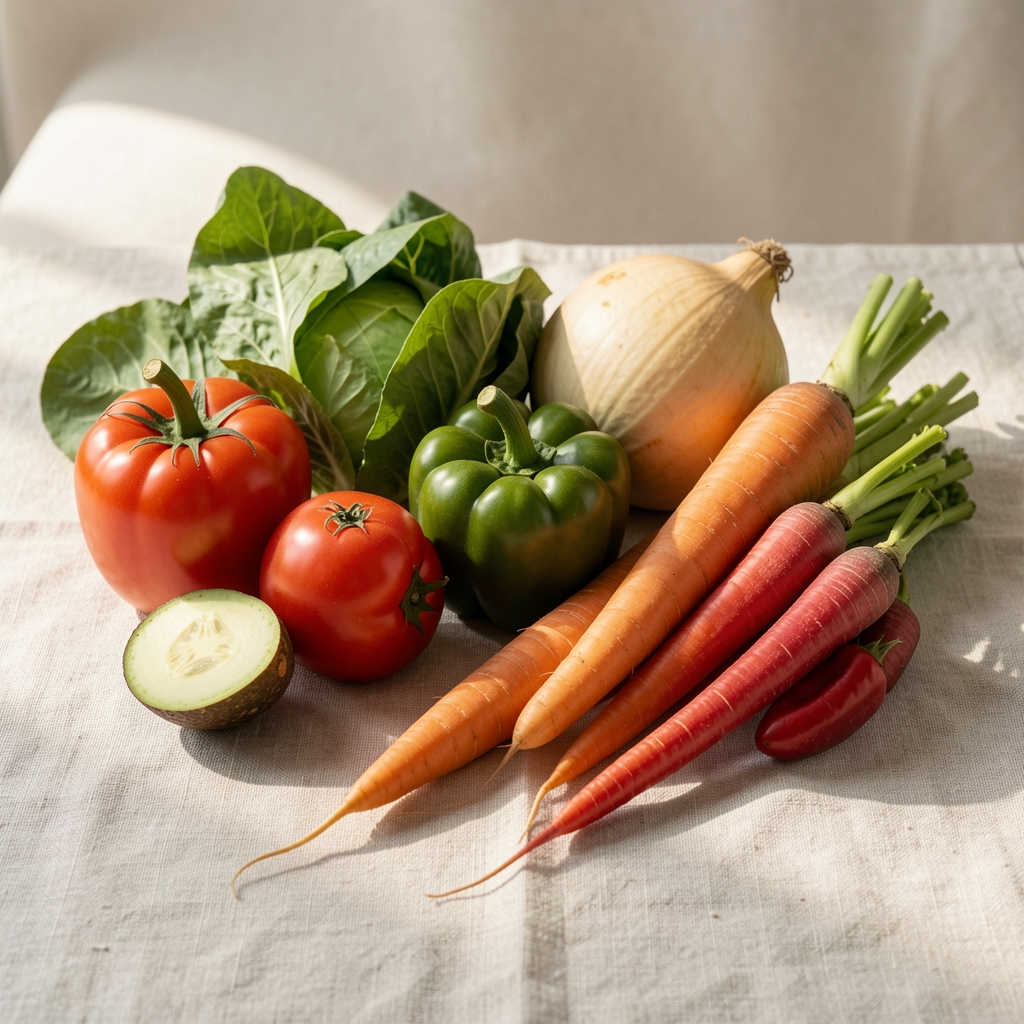
Market produce, early morning — the starting point of the weekly plate.
Seasonal Produce and Weight Awareness
The relationship between seasonal eating and weight awareness is one that nutritional writing tends to either overstate or ignore entirely. The overstatement runs toward the prescriptive: eat this in November, avoid that in March. The neglect comes from a focus on individual nutrients rather than the broader pattern of the plate across the year.
What the evidence does support is a more modest claim: that eating according to seasonal availability tends to introduce a natural variety into the diet that a fixed menu rarely achieves. The body is asked to process different combinations of fibre, water content, and micronutrients across the year, which supports a sense of dietary balance rather than the monotony that characterises many restrictive approaches. The role of dietary fibre in supporting a sense of fullness between meals is one of the more consistently observed findings in published nutritional research.
In practical terms, this means that a person who shops for winter roots — celeriac, parsnip, swede — and cooks them into a varied weekly rotation is likely to consume a different profile of fibre and starch than one who maintains the same vegetable roster year-round. Neither approach is inherently superior in isolation, but the seasonal approach tends to produce, as a by-product, a wider engagement with vegetables generally, which most nutritional perspectives regard as a positive feature of any eating pattern.
“The decisions made before cooking begins are the most nutritionally significant decisions of the week.”
Eleanor Whitfield, Elbave Field Notes
The Role of Cooking in Nutritional Balance
Home cooking is discussed in wellness writing with a certain romantic insistence that can obscure its actual nutritional significance. The romance tends toward the pastoral: slow-cooked broths, handmade bread, a single candle. The significance is more prosaic. When a person prepares their own food, they exercise a degree of awareness over what goes into it that commercially prepared food does not usually permit.
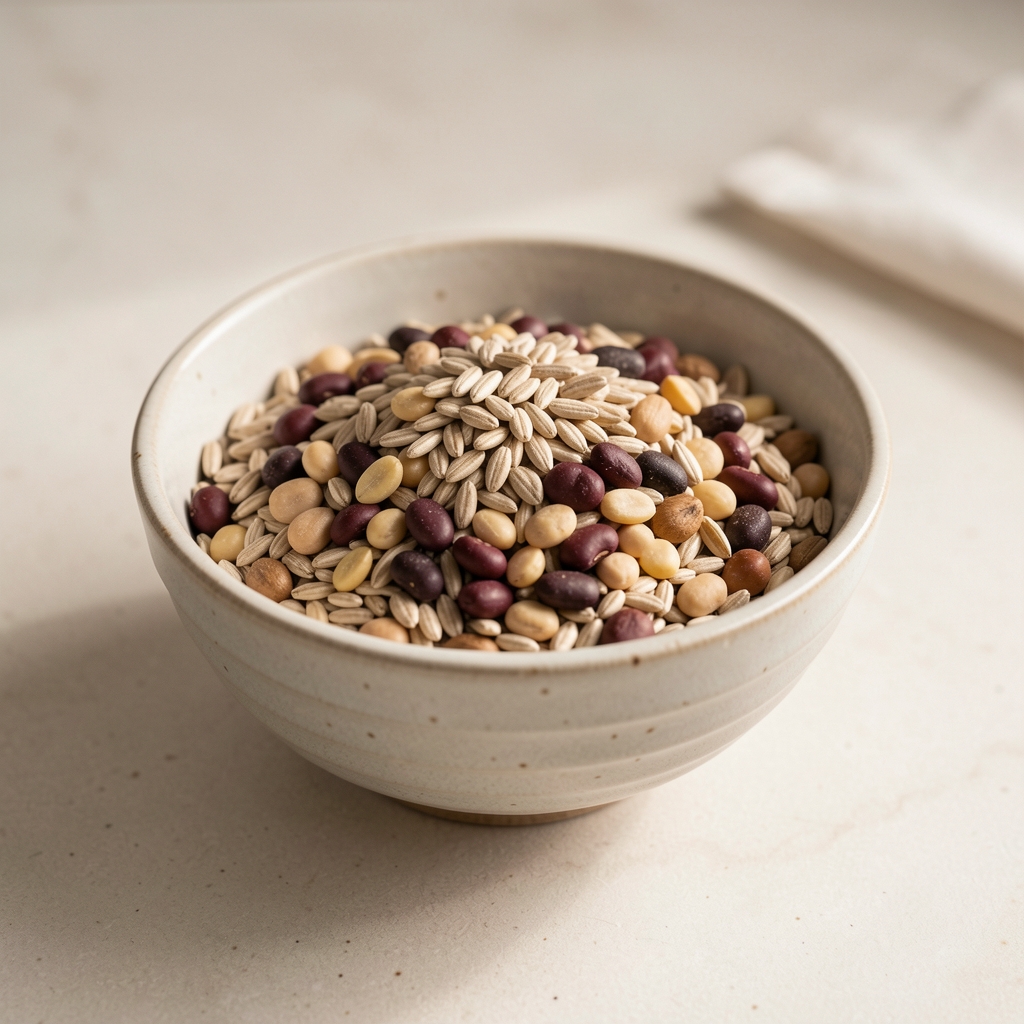
This awareness is not the same as expertise. One does not need to understand the precise micronutrient composition of a bowl of roasted vegetables to benefit from the attentiveness that preparing it requires. The act of cooking, in this reading, is a form of portion and ingredient awareness made practical. The person who assembles a meal from whole ingredients — grains, legumes, vegetables, a modest amount of fat — is almost by necessity engaging with quantities and combinations that a pre-packaged alternative rarely encourages.
There is also the question of pace. Cooking from scratch takes time, and that time tends to slow the transition from preparation to eating. A slower approach to arriving at a meal is associated in several areas of nutritional observation with a more measured consumption — not because of any mechanical relationship between time and digestion, but because the ritual of preparation tends to precede a slightly more attentive experience of eating itself.
Food Choices, Body Weight, and the Long View
The relationship between food choices and body weight resists the kind of linear narrative that popular wellness writing tends to prefer. The narrative runs as follows: make better choices, achieve better outcomes. The evidence, where it is most carefully assembled, suggests something considerably more textured.
Gradual weight change — in either direction — is typically the outcome of many overlapping patterns: the frequency and composition of meals, the degree of physical movement woven into daily life, the regularity of sleep, and the accumulated stress of ordinary existence. Food choices sit within this constellation rather than above it. They are consequential, but not determinative in the singular way that much weight-related writing implies.
A nutritional perspective on weight that takes the long view tends to focus on patterns rather than individual decisions. The question is not whether a particular meal was well-composed, but whether the eating patterns of a week, a month, a season reflect a reasonable engagement with variety, portion, and whole foods. It is in this register that the market visit, the stocked kitchen, and the habit of home cooking acquire their cumulative significance.
Key Observations
-
01
The structure of a weekly shop shapes daily eating more consistently than individual meal choices.
-
02
Seasonal produce introduces dietary variety as a natural by-product of shopping patterns, supporting nutritional balance.
-
03
Home cooking from whole ingredients supports portion and ingredient awareness without requiring expertise.
-
04
Weight awareness is best understood through the lens of accumulated patterns rather than isolated decisions.
Whole Foods and the Plate Over Time
The term “whole foods” has acquired a degree of ideological weight that its actual meaning doesn’t entirely support. It refers, in its most useful sense, to foods that have not been significantly processed — that retain their original structure, fibre, and most of their micronutrient content. By this definition, a well-roasted beetroot is a whole food; a ready-made beetroot salad dressing is not.
The nutritional argument for a whole foods approach is not that it represents a superior moral position, but that it tends, over time, to produce a plate with greater dietary variety and fibre content, and with less reliance on the added sugars and refined starches that characterise heavily processed foods. These differences compound gradually. They do not announce themselves as dramatic interventions. They operate more like the accumulated effect of a slightly different weekly rhythm — a rhythm shaped, as this piece has tried to suggest, at the point of purchase rather than at the point of preparation.
The editors of this publication return to the market each week with something like this in mind: not a directive, not a target, but an awareness that the choices made among the stalls — the seasonal vegetable taken over the processed convenience — carry forward into the kitchen, onto the plate, and gradually into the body’s long record of what it has been asked to process. That record, accumulated quietly over seasons, is what nutritional balance, in its most accurate sense, looks like.